Pages

Monday, March 15, 2010

Sculpture and Nepenthes Raja


photo from Colorado Carnivorous Plant Society.

A friend and I were talking about how boring the plants were in Avatar. With one exception, they were just pumped up versions of bamboo and red banana.


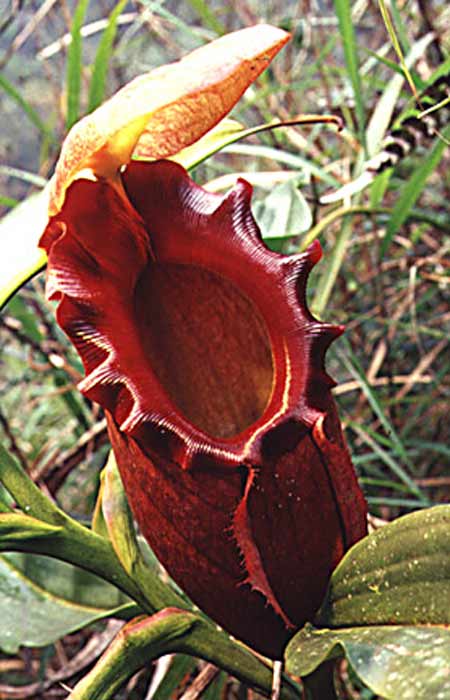
photo from Apodagis.com


Nepenthes Raja is a plant that looks like it belongs on another planet or in a movie. Locked up in a studio, with the directive to create alien plants, you couldn't invent something this bizarre or beautiful. This carnivorous bowl is actually a leaf, not a bloom.

For theme and variations on this form see the entire page of Nepenthes at Apodagis.com

Friday, March 12, 2010

Sculpture and Feathers 3

When you're sculpting a bird, or anything figurative, you're not "making" feathers, or flesh or fur. You're creating forms that capture and / or reflect light.

It took me a long time to understand this, so I'll say it again - and maybe save you some years learning this basic fact of sculpture.

Though you may think you're sculpting a ducky or a bunny, or whatever, you're not. You're creating forms that capture or reflect light.

Changing how you think about your sculpture will improve anything you sculpt.


Here's a good example from the New York Times of how feathers blend together but break up into larger clusters. These Greater Sulphur Crested Cockatoos are all fluffed up and curious.

I do question the sanity of putting a $1000 dollar handbag and million dollar actress Julianne Moore in the close vicinity of any cockatoo. Once that photographer's flash goes off all hell could break loose...

Wednesday, March 10, 2010

Sculpture and Feathers 2

People think of feathers as flat.
Nothing could be further from the truth, I know because I sweep them up daily, cleaning the bird room. Feathers are fascinating series of compound curves and planes.

Below, primary flight feathers are given a menacingly sexy rendering by costume designer Catherine Zuber.

The costume works because it focuses on one aspect of one kind of feather. Everything else is eliminated to really see those long finger-like primary flight feathers. Tears in between the barbules give those knife like shapes more impact.

It's all about the impact. The costume works. What's missing is that each wing's primaries are also curved in opposite directions, right and left. Too complex for the stage, but not for sculpture.


Photo by Sara Krulwich from the New York Times review of The Tempest by the Bridge Project. article, Air sprite, Feral Creature, Rapturous Love and Other Scorcery.

Monday, March 8, 2010

Sculpture and Feathers

I hate it when people don't know how to model feathers.

Take this example, by a sculptor who shall go unnamed, but is known as "the Sculptor of Eagles".

Each and every feather is rendered as if it were a number being audited by the IRS. Every one accounted for in painstaking, painful detail.

The result is leaden. His marketing prose may soar, but the sculpture doesn't.


Here's another eagle by another sculptor. Same problem.


At issue is what one know's vs what one sees. That birds are covered in feathers is true, but when you can't see the bird for the feathers, something is very wrong.

Friday, March 5, 2010

Sculpture and Ellen Lebow


Black and White work makes my heart sing
-and my mind work double time.

Ellen Lebow is a master of black and white images. She uses the difficult medium of carving (with great delicacy) through a thin layer of black ink to a white substrate. It's a bit like etching, but the finished work has a directness and vibrancy all its own. It's also a high wire act that allows no mistakes, every mark shows.

Don't let the still life fool you, look beyond the table to see the lovers...
Lebow's subjects range widely. In some, she has apocalyptic visions, blending Islamic imagery, Disney characters with casts of thousands. Other panels show portraits of people from Hati, where she spends part of the year.
See more of her work at RicePollak Gallery.

If you're on the east coast catch her retrospective.

Ellen LeBow Mid-Career Retrospective
March 12 - May 2, 2010
Provincetown Art Association & Museum (PAAM)
460 Commercial Street, Provincetown, MA
Opening Reception Friday, March 12th, 6-8pm

Wednesday, March 3, 2010

Sculpture and Li Chen

"I just got this book of a Taiwanese sculptor. You must see it. Come over immediately!"

With a summons like that you gotta go. My friend Richard Brandt was right. The sculptures of Li Chen are amazing. Spiritual, georgeous, playful, profound.

It's so wonderful to see art that isn't trafficing in irony.

Li Chen's work is based in Buddhist and Taoist traditions, but also very 21st Century. Wonder if he saw the late work of Eli Nadelman?


"Nothing in the Heart." bronze sculpture with silver leaf.

His surfaces are like polished basalt and mother of pearl. When they're not liquid gold or a water-like reflection of the sculpture.


"Landscape In Heaven", Bronze with gold and silver leaf.
Photos from Li Chen's website.

The New York Times ran an article "A Modern Spin on Spirituality" on his work

Monday, March 1, 2010

Sculpture and 10 things in the studio #7

More daily happiness. How can you make art and not surround yourself with other's art?


A beautiful Christ, with powder blue boxers under the silk, from the Philippines, with surrounding Balinese shrine doors.


A Nepalese photo frame that I've turned into a tiny mirror and painted my "holy blue" ie tempera paint.(You can catch a glimpse of me in the mirror.) There's a very tired madonna on top. next is the Christos. At lower right is a Japanese Daruma. It's very direct carving. It deserves a better photo. not now...


Carved Balinese shrine doors that were made into a frame for Persian miniature painting. The frame is old fence material and needed a bit more ornament. I used wooden Checkers and sunk them into the frame. Works, no?


7. My art collection
I bought my first two works of art the day after I was layed off from my first professional art job. It was a crazy extravagance of $200 that I've never regretted. Most of the art is sculpture, specifically wood carvings, some folk, some religious.Each work speaks to me in three ways:

a) It tells it's story (or the story I've given it.)
b) It functions as dimensional library I can consult at any time:"How did they make that cut? Organize the patterns? Paint the surface? Simplify the forms? Why is this piece so moving to me?
c) They're my cheering squad.Few things feel more discouraging than trying to make a living hand carving wood in the 21 Century. These wood carvings remind me that there are other things that are important: Devotion. Appreciation of the natural world. Taking all the time necessary to make something beautiful. That there is a long line of craftsmen and women who came before me, I'm just claiming my place in line.

In her wonderful book, Art Objects, Jeanette Winterson writes:
"If truth is that which lasts, then art has proved truer than any other human endeavour. What is certain is that pictures and poetry and music arre not only marks in time but marks through time, of their own time and ours, not antique or historical, but living as they ever did, exuberantly, untired."